|
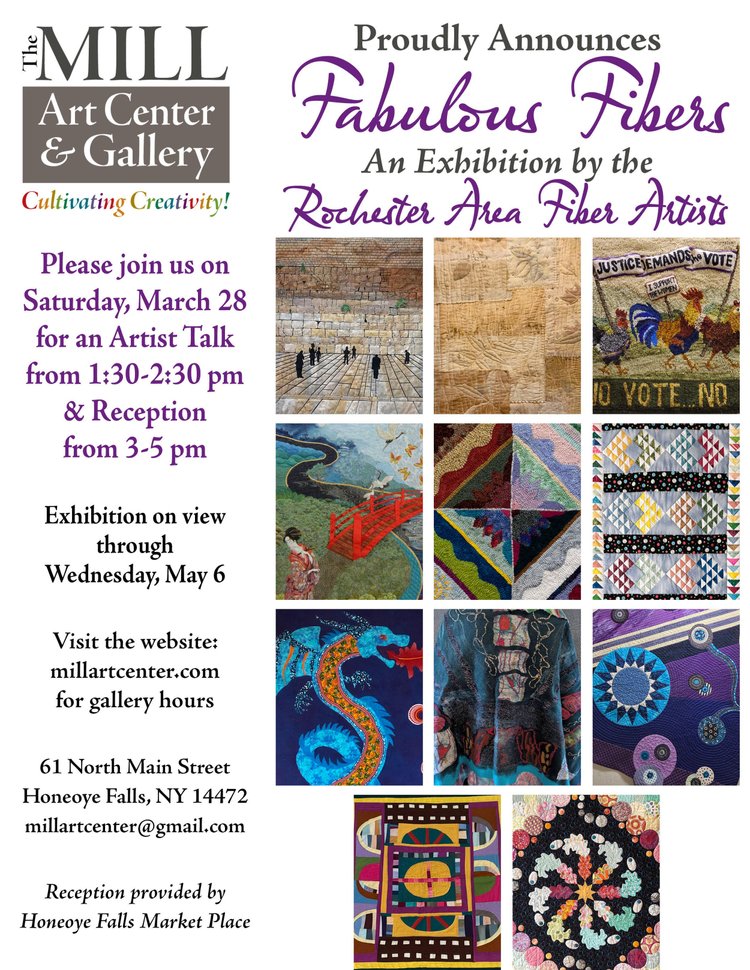
“If I wove only to produce cloth, my weaving would have ended long ago.” - Zane Grey Before cloth was cut and stitched into garments, before patterns were drafted onto paper, textiles began as stories told through touch. Threads were spun not only for function, but also for meaning. They were woven into symbols, becoming part of rituals and identities that traveled across generations. A motif could signify a belief, a pattern could encode community, and a stitch could become an act of resistance. As textile practices evolved, so too did their purpose, extending beyond sheer necessity to clothe the body in order to shape culture, politics, and art. Few places capture this transformation as vividly as the city of Rochester, where textile traditions have long intertwined with social change and creative expression. Rooted in a region shaped by both industry and craft, Rochester’s textile history reflects the labor of production and the poetry of design. What began as a story of utility (mills, uniforms, and domestic craft) gradually unfolds into one of activism and artistic reinvention, binding together centuries of makers across the region. In 1851, fabric became a tool of protest. The Rochester Ladies’ Anti-Slavery (Sewing) Society was formed as a small group of women committed to ending slavery, using needle and thread as a symbol as well as a strategy. Through handcrafted goods sold at fairs and bazaars, these women raised funds to support the work of Frederick Douglass and sustain his newspaper, transforming an already common nineteenth-century craft into public action. Their annual festivals brought together textiles and ideology: garments, quilts, and handmade objects carried abolitionist messages into homes and communities. By the twentieth century, Rochester’s textile story shifted from activism to preservation, retaining its deep connection to memory. This is beautifully embodied in the Alling Coverlet Museum in Palmyra, home to the largest collection of American handwoven coverlets in the United States. Founded from the lifelong collection of Merle Alling, a Rochester-based weaver and collector, the museum preserves textiles dating from roughly 1820 to 1880. Within the museum’s walls, these coverlets reveal a layered history of American life. Some feature patriotic imagery woven into wool and cotton, reflecting a nation on the brink of change, while others bear the names of their makers or owners. The collection extends beyond finished works to include looms, spinning wheels, and pattern drafts that offer a full picture of the textile-making process. This commitment to textile knowledge continues through organizations such as the Weaver’s Guild of Rochester, founded in 1946. What began as a small gathering of enthusiasts has grown into a vibrant nonprofit dedicated to education, community, and innovation in fiber arts. Through workshops, lectures, and its Weaving & Fiber Arts Center, the Guild fosters traditional techniques and contemporary experimentation, creating a living bridge between past and present. Alongside the Guild, groups such as Rochester Area Fiber Artists (RAFA) reflect the collaborative spirit of the region’s contemporary fiber community. These collectives bring together artists working across disciplines, including quilting, weaving, embroidery, and mixed media, to offer exhibition opportunities and shared dialogue. In doing so, they echo earlier sewing circles as spaces of creative exchange and mutual support. In contemporary Rochester, individual artists continue to reinterpret these traditions. Eve Botelho creates richly embroidered landscapes, using thread as a painter might use light and color, translating the natural world into layered textile compositions. Her work blurs the boundary between image and fabric, emphasizing texture as surface and a form of storytelling. Similarly, Tammy Friedrich draws on historical practices through her handwoven “Woolly Worm” rag rugs. Rooted in traditions of reuse and resourcefulness, her work transforms discarded materials into vibrant, tactile forms that echo generations of makers who found beauty in what remained. Across centuries, Rochester’s textile story is not a single thread but a woven field of many voices. In one moment, we see fabric as protest, stitched in the service of abolition. In another, we see it preserved behind glass, carrying the weight of history. Presently, we see it reimagined with thread becoming image, structure becoming expression, and community becoming collaboration. The metamorphosis itself is the message. Every textile tells a story, but the maker determines its meaning: whether to resist, preserve, or reinvent. In Rochester, those choices have shaped a legacy where cloth is not just cloth; it is memory, activism, and art woven together across time.
|